2027
MedHackathon Asia 2027
We are looking for an institution to host the 2027 edition. What hosting involves →
Overview
MedHackathon Asia is a week-long working meeting for researchers, clinicians, bioinformaticians, data stewards, and precision medicine leaders across Asia. Around fifty participants form project teams and spend the week building things together — data catalogues, analysis pipelines, reference resources, governance frameworks — rather than sitting through talks.
Two editions have been held so far: Chonburi, Thailand in February 2025, and Singapore in July 2026. Planning for the third edition has begun, and the first thing it needs is a host.
Why this matters
Asia holds the world’s largest and most diverse population base, but genomic resources across the region remain fragmented. National initiatives have grown quickly, yet cross-border collaboration is still limited by differences in metadata standards, access models, privacy regulation, consent practices, and technical infrastructure.
MedHackathon Asia exists to work on those gaps directly. The aim is not only to discuss policy, but to build concrete, reusable frameworks for data discovery, secure analysis, and population-aware genomic interpretation.
A short history
2025 · Chonburi, Thailand
The first edition ran from 3 to 7 February 2025 at Burapha University in Chonburi, Thailand. Around sixty participants from seven jurisdictions — Thailand, Japan, Singapore, South Korea, Hong Kong, Indonesia, and India — worked across ten project tracks, including the Asian Pangenome Initiative, a federated genome-phenome archive catalogue, variant analysis harmonization, pharmacogenomics, federated research environments, and data governance.
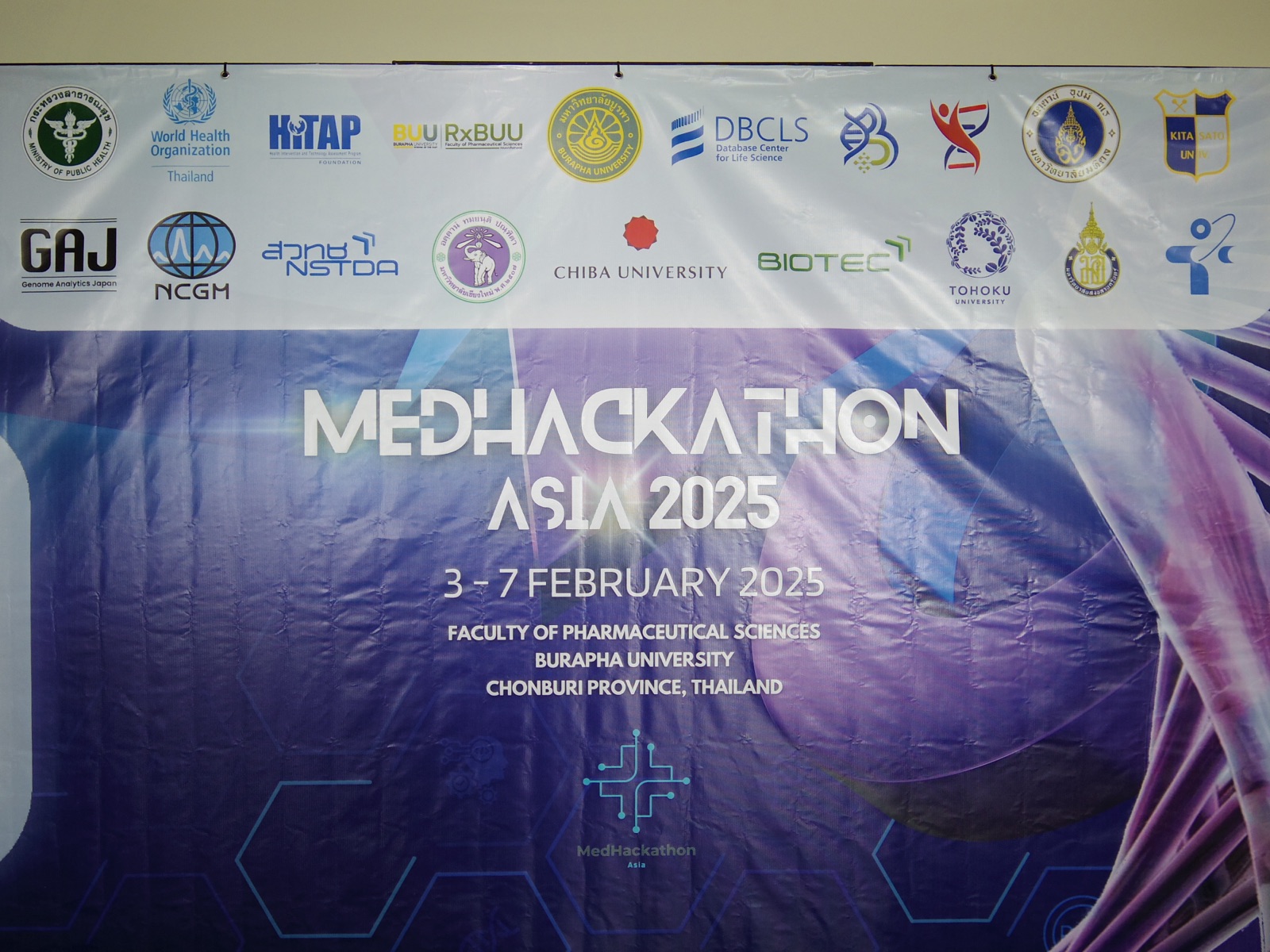
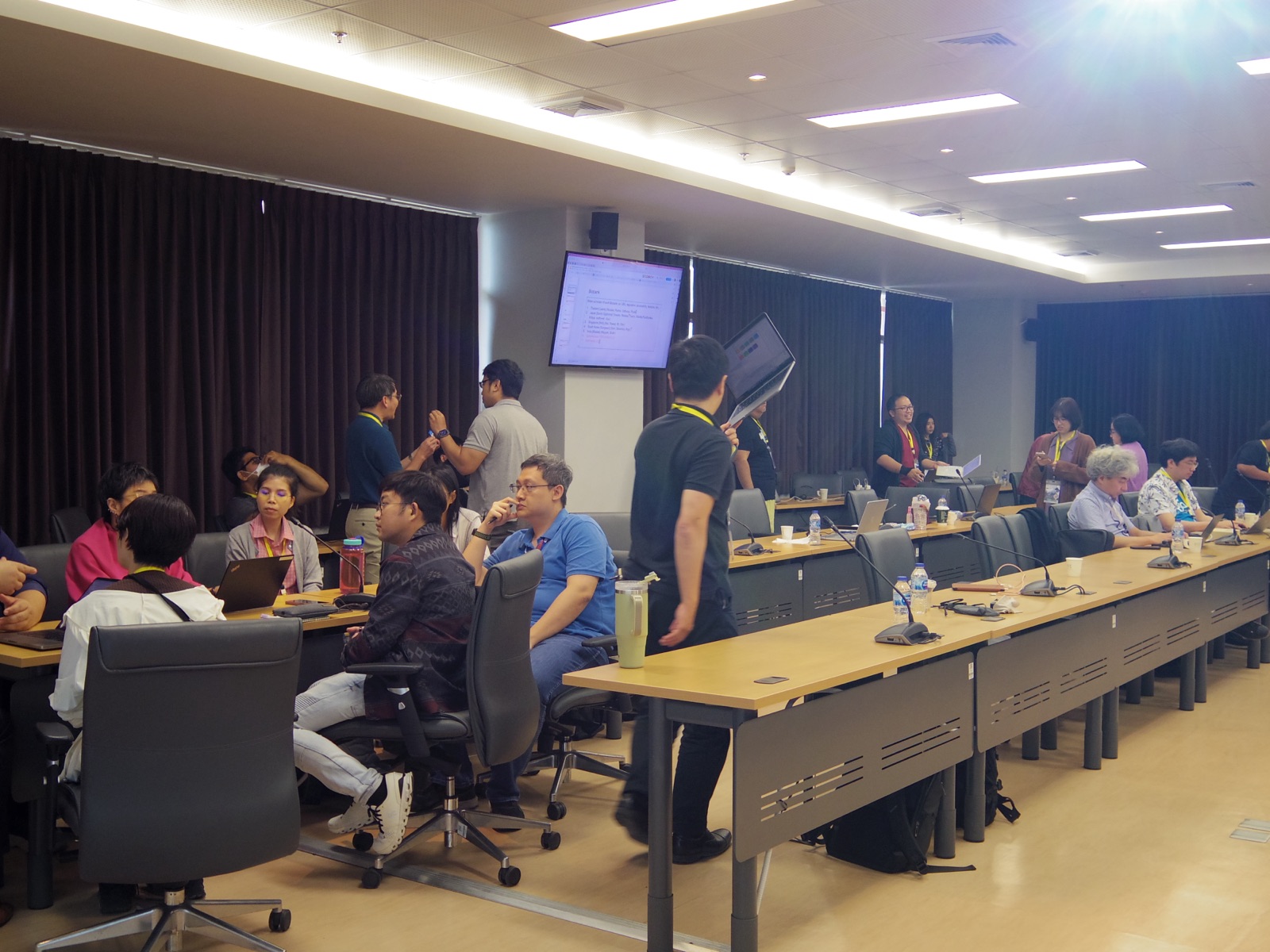
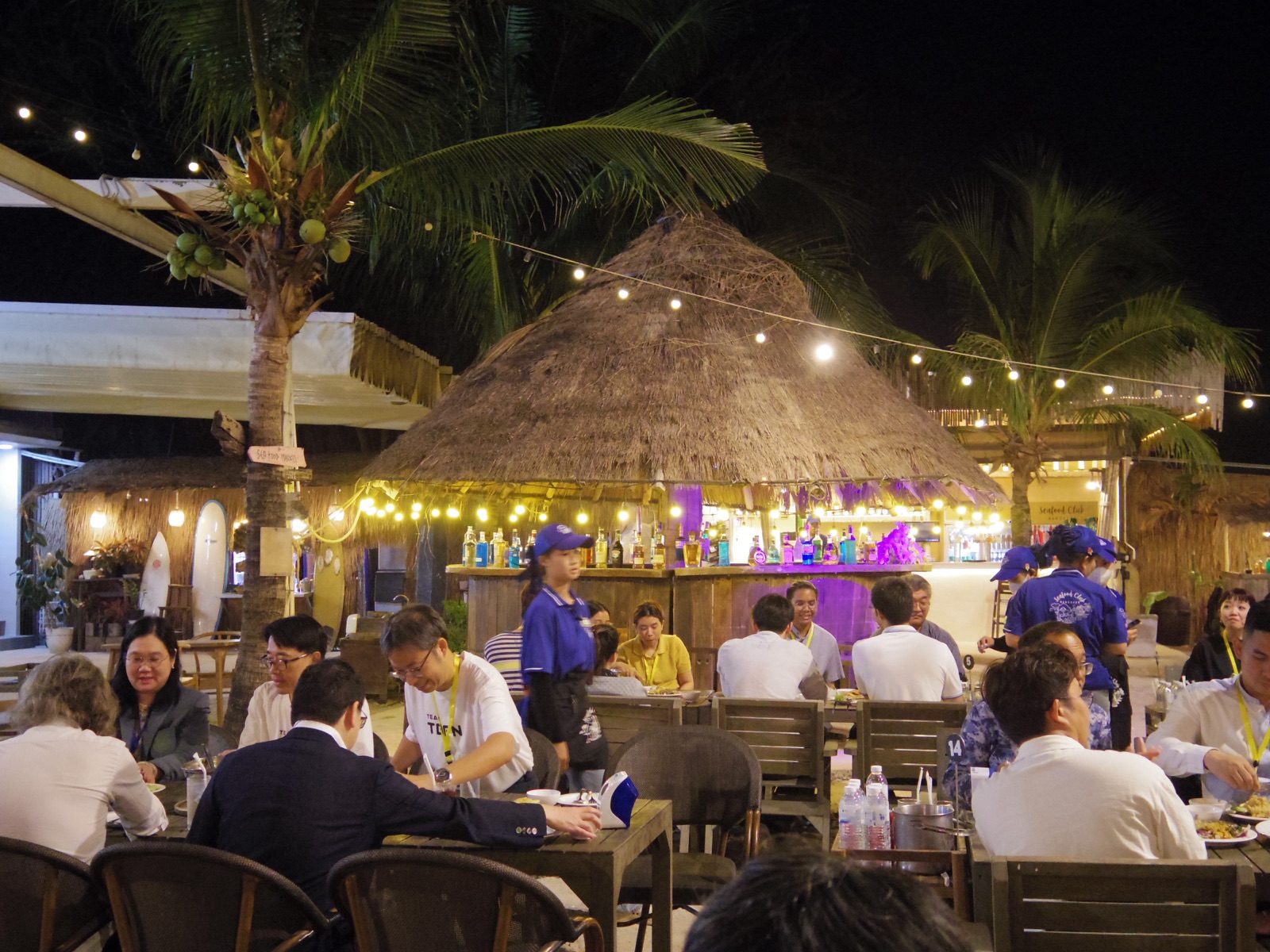
The community wrote up the outcomes together, published as: The MedHackathon Asia Community, “Unlocking the Potential of Asian Genomic Data: A Collaborative Framework for Precision Medicine Innovation,” GigaScience, 2026 (doi:10.1093/gigascience/giag052). See also the MedHackathon Asia 2025 website.
2026 · Singapore
The second edition ran from 27 to 31 July 2026 at Begonia Pavilion, Downtown East, Singapore. It was hosted locally by PRECISE — Precision Health Research, Singapore, with sponsorship from Amazon Web Services. Participants came from eight Asian jurisdictions — Singapore, Japan, Thailand, China, South Korea, India, Indonesia, and the Philippines — joined for the first time by colleagues from the United States.
Where 2025 established the horizontal foundations this community shares — harmonized biobanks, common standards, governance and ethics, federated secure research environments, and Asian reference resources — 2026 set out to find the vertical lines that cut across them: pharmacogenomics, disease and phenotype genomics, structural variation and other genomic features. The goal was to identify the collaborative projects this particular community is placed to carry together over the coming years. A community report on the week is in preparation. See also the MedHackathon Asia 2026 website.
What we work on
The work has two layers, and they run at right angles to each other.
Shared foundations are the horizontal base: the standards, governance and infrastructure that every project in this community ends up needing. 2025 was largely spent establishing them. Project tracks are the vertical lines: concrete pieces of work, proposed and led by participants, each one cutting down through several of those foundations at once. 2026 was spent identifying which tracks this particular community is placed to carry.
A pangenome track, for example, needs harmonized biobanks to get samples, agreed metadata standards to describe them, governance to move them across borders, and a secure environment to compute in. It touches four foundations. So does almost every other track — which is why the foundations are built once and shared, rather than rebuilt inside each project.
Every project track crosses several foundations. The foundations are built once and shared; the tracks are where the year's actual work happens.
The six shared foundations, in full:
- Harmonized biobank collaboration across Asian countries and initiatives
- Standardized metadata, analysis pipelines, and data submission practices
- Responsible data governance, including DAC workflows, privacy protection, and ethical data sharing
- Federated and secure research environments that respect national and institutional requirements
- Reference resources and analytical tools that better represent Asian populations
- Capacity building for precision medicine, including training and shared implementation practices
Project tracks are proposed by participants and carried between editions. Recent ones include:
- Asian Pangenome Initiative
- Asian Genome-Phenome Archive data catalogue
- Variant analysis pipeline harmonization
- CNV analysis for clinical interpretation
- Pharmacogenomics and polygenic risk score implementation for Asian populations
- Federation of Trusted Research Environments
- Ethical, legal, and social issues in genomic data sharing
- Federated aggregated variant browsing across Asian cohorts
- Imputation pipelines and servers for Asian reference panels

What a MedHackathon week looks like
The week is deliberately front-loaded, so that the middle of it stays clear:
- Monday afternoon — opening session, welcome from the host, community updates, self-introductions, and project pitches. Starting after lunch also lets people flying in that morning make the opening.
- Tuesday, Wednesday and Thursday — three full days of hacking. Protecting these three days is the single most important thing about the schedule.
- Friday — wrap-up, teams report results, joint drafting of the community report
The programmed sessions are kept to Monday on purpose. Anything that has to happen during working hours — a facility tour, a sponsor session, a round of national project updates — competes directly with hacking time. In Singapore in 2026 the talk sessions had to move to Tuesday morning to fit around the sequencing facility tour, and that is the trade-off worth designing out. A host planning a tour or a site visit should aim for Monday morning before the opening, or the Friday afternoon after the wrap-up.
Participation is by registration and review rather than open sign-up: the organizing committee circulates the form through country contacts and community channels, and reviews every application. Keeping the group to around fifty is deliberate. It is small enough that everyone in the room can find everyone else by Wednesday.
Looking for the next host country
MedHackathon Asia moves around the region. Each edition is hosted by a local institution working in partnership with the organizing committee, and hosting puts a country’s genome and biobank community at the centre of the regional conversation for the year.
We are looking for a host for the 2027 edition. What a host actually has to provide is short: a room and lunch. Everything beyond that is welcome, but none of it is a condition of hosting, and no institution should rule itself out because it cannot do all of it.
EssentialWhat a host must provide
- A venue for around 50 participants for the week: a plenary space, room for teams to break out, reliable wifi and power
- Lunch through the week
HelpfulWhat makes it easier
- Help finding affordable accommodation near the venue
- Approaching local sponsors, particularly to fund travel support
- Holding and managing the budget for sponsorship raised locally
BonusNice if you can
- A welcome dinner
- A short excursion or a tour of a local facility
The rest of the work sits with the organizing committee and with participants themselves:
The organizing committee provides
- The website and public communications
- Registration, participant review, and confirmations
- The program: sessions, tutorials, project tracks, and speakers
- Running the event itself across the week
- Continuity between editions, including the community report
Participants cover
- Their own travel to the host country
- Their own accommodation for the week
- Participants who would otherwise be unable to attend may apply for travel support, funded from sponsorship
Interested in hosting?
Nothing formal is needed to start a conversation. Write to the organizers at admin-medhackathon-asia@googlegroups.com, or raise it on the Google group. We can walk through what hosting actually involved for Burapha University in 2025 and PRECISE in 2026 — venue options, realistic costs, how the sponsor conversations went, and how far ahead the planning needs to start. Dates for 2027 will be set together with whoever hosts.
Call for sponsors
MedHackathon Asia welcomes organizational sponsorship. Sponsorship matters to this event in a specific way: it is what allows researchers from institutions without travel budgets to be in the room, and the value of the week depends on who is in the room.
Sponsorship supports:
- Travel and accommodation grants for participants who could not otherwise attend
- Sponsored sessions and workshops within the program
- Event operations, including venue costs, catering, and the shared infrastructure teams use during the week
For sponsoring organizations, the event offers direct contact with the people building Asia’s genomic and biobank infrastructure — national project leads, biobank directors, and clinical genomics teams from across the region — and a standing connection to a cross-border research network whose work is published openly.
Sponsorship tiers are arranged for each edition together with the host institution. Please write to admin-medhackathon-asia@googlegroups.com and we will share the current package.
Stay in touch
Registration for 2027 will open once the host and the dates are confirmed. The best way to hear about it is the Google group.
The event is intended for people working in human genetics, medical informatics, biobanking, clinical genomics, bioinformatics, data governance, and related areas. If you would like to propose a project track for 2027, or connect your national initiative to this community, please get in touch.
Contact
Please join our Google group at MedHackathon Asia or email the organizers at admin-medhackathon-asia@googlegroups.com.